PHD Veterinary Service

PHD Veterinary Service

Contact Info

Dr. Porter @ 352-258-3571
portermi.dvm@gmail.com

Read more about Dr. Porter
And PHD Veterinary Services @


Showing posts with label horse vet. Show all posts

Friday, January 4, 2013

Illegal Equine Supplements!!!!

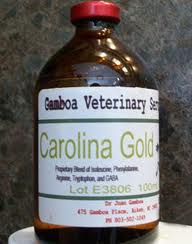
Carolina Gold
Magnesium Sulfate
The supplements imaged above are both considered "performance enhancing" drugs and are banned from use in horses of all disciplines!! Why am I posting this information you ask? Please take a moment to read the story about "Humble" the pony that was recently published in The New York Times. This pony died suddenly at a major horse event after being administered an injectable "supplement" by the horse trainer. A published medication sheet indicated that the pony was treated with Estrone, Depo Provera, Banamine, and Dexamethasone multiple times in the 48 hrs preceding his sudden death! The medication that was administered just prior to the pony's sudden death was not listed and remains unknown. 


If this story does not upset you then read about all group of polo ponies that died due to an over-dose of a supplememt called Biodyl. This supplement contains vitamine B12, selenium, potassium, and magnesium. Oddly enough, this supplement is very popular in the illegal sport of rooster fighting!!


These stories are examples of the gross and inappropriate actions by horse trainers and veterinarians with regards to the type and frequency of medications given to show horses. Some supplements are "home made" such as Carolina Gold and there is no telling what substances are mixed into the bottle. Other supplements are FDA approved medications such as Magnesium Sulfate which are used in appropriately in horses to enhance performance. Too often, the result of excessive use is sudden death due to cardiovascular collapse.


I urge to know exactly what your horses are being treated with and ask the question "why". Please read below about the product called "Carolina Gold". Although this drug has not been associated with sudden death, it is illegal and its use may result in hazardous riding conditions!

The active ingredient in "Carolina Gold" is known as Gabapentin or "GABA".  When administered, it acts as an inhibitory neurotransmitter and therefore has the potential to be anxiolytic, analgesic, anticonvulsant, and sedative. In human medicine, GABA containing drugs are prescribed for epilepsy and neuropathic pain. Adverse side effects include dizziness  fatigue  and drowsiness, to name a few.

In veterinary medicine it has been used sparingly to control seizures in foals. In addition, it has been classified as a class 3 performance enhancing drug by the Association of Racing Commissioners International. Interestingly, this product was introduced into the performance horse world as a means to "calm" horses just before entering the show arena! In February of last year, the USEF officially banned this product from you in performance horses.

http://www.dressage-news.com/?p=14964


Thursday, December 27, 2012

Long toe/Under run heel!!

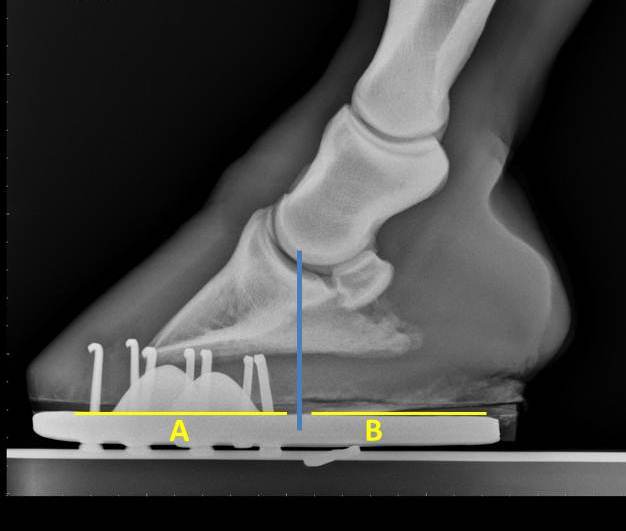
The image below is of a horse's foot that is suffering from a conformational problem known as "long toe-under run heels". This horse tends to grow significant amount of hoof wall within 4-5 weeks without growing normal heel. Although the heel regions grow, they tend to roll under the center of the hoof. As such, this horse and others like him are prone to heel pain and poor performance. In Figure 1 the center of rotation is marked by the blue line. Ideally, the length of foot that is in front of the blue line and behind should be equal. This would result in a horse that is balanced "cranial to caudal" with respect to the center of rotation. 


Figure 1

As the amount of foot behind  (B) or caudal to the center of rotation decreases compared to "A" there is  a significant increase in the amount of force that is applied across the heel regions. This results in the rolling under or "under run heels" that is imaged in Figure 1 and 2. When this horse is trimmed, the hoof wall needs to be trimmed back to the widest portion of the frog.  This may seem counter intuitive due to the apparent "lack of heel" however it is necessary to achieve "normal" heel growth. 
Figure 2

The radiograph below is that of horse that has heel pain and is lame when trotted in a small circle in both directions. The hoof tester exam noted a strong positive response across the bar region of both heels. Notice that the length of "B" is significantly shorter than "A". In order to correct this problem, corrective shoeing is a must!  The process begins with a balanced trim that includes lowering the heels to the widest portion of the frog. This is followed by applying a shoe that either has built-in break over such as a natural balance/equilibrium shoe or break over is increased manually be rolling the toe. In addition  the shoe is set extra full in an attempt to increase the length of "B" and hence support the caudal aspect of the foot. 
Figure 3

In Figure 4 the horse has been trimmed and re-set. Notice that the length of  "B" is nearly the same as "A". This horse is quite close to being balanced with regard to the center of rotation (blue line) and within 4-5 days returned to complete soundness. Finally, these horses that tend to have a long toes and under run heels need to be trimmed and re-set every 4-5 weeks. It is quite common that these horses are sound for the first 4 weeks after the farrier visit yet their performance begins to diminish as 5 to 6 weeks pass before they are trimmed and re-set. Although radiographs are not necessary to diagnose this problem, they are helpful for quantifying the extent of imbalance and documenting improvement after shoeing. 
Figure 4


Thursday, December 6, 2012

Displaced Soft Palate!!

Figure 1
The image above is an endoscopic pic of a middle-aged gelding that presented for a history of exercise intolerance. Apparently, during low level, forced exercise, the gelding would begin to make loud "gurgling" noises and become short of breath! In addition, the gelding would cough on a regular basis, especially when eating in the stall. 

Figure 2

 The image above is that from a normal horse. The yellow arrow is pointing to the epiglottis which is not visible in Figure 1 and Figure 3 due to the dorsal displacement of the soft palate. Normally, horses breathe through their nasal passages. The epiglottis helps keep the soft palate in position thus keeping the oral pharynx separate  from the nasal pharynx. However, when the soft palate becomes displaced and covers the epiglottis, the nasal pharynx and oral pharynx communicate directly. When this occurs, the horse suddenly begins to breath through its oral cavity which results in a gurgling sound and exercise intolerance.

Figure 3
The cause of the chronic dorsal displacement of the soft palate in this case is in part due to chronic inflammation of the soft palate (yellow arrow) and potentially an abnormal epiglottis (blue star). The epiglottis was not visualized in this exam and may require an oral endoscopy and skull radiographs to better determine if  there is a structural problem with the epiglottis. Management of this condition involves treating with systemic anti-inflammatory medications and medicated throat wash. If the soft palate remains displaced, surgical consultation is recommended. Yet another example of the benefit of an endoscopic exam for a horses that suffer from coughing, exercise intolerance, or nasal discharge.

Thursday, November 29, 2012

High Ring Bone!!

The radiographic image below is of the right hind pastern of a 4 year old mare that presented for a prepurchase exam. The mare had only been under saddle for 6 months. During the active exam, the mare cross-cantered when lunged to the left. In addition, the pastern area was "thicker" when compared to the opposite hind limb and the mare was moderately positive to flexion of the limb in question. Due to the suspicion of a significant problem, the right hind pastern was radiographed. The yellow arrows highlight new bone growth along the edges of the pastern joint. The bone growth or osteophytes are large and proliferative. These findings are indicative of advanced osteo-arthritis of the pastern joint otherwise known as "high ring bone". 


Figure 1
In Figure 2, the same osteophytes are noted as the course around the front of the pastern joint. The yellow arrows point to the osteophytes or irregular "white" structures along the edge of the pastern joint. 

Figure 2
Figure 3 and 4 are radiographs of a normal pastern joint. There are no osteophytes noted along the margins of the pastern joint. Notice in Figure 4 the smooth, curved border of the normal pastern joint. Interestingly, the pastern imaged in Figures 3 and 4 was radiographed because it palpated "thicker" than the opposite limb. Fortunately, there was no evidence of pastern arthritis. 

Figure 3

Figure 4
 In Figure 5 there is significant new bone growth or osteophyte development along the margins of the coffin joint. This is known as "low ring bone". Generally speaking, "high" or "low" ring bone is a significant finding during a prepurchase exam. Low ring bone is more common in draft breed horses. In addition, varying degrees of coffin joint arthritis, in active sport horses, is more common than pastern arthritis.

Figure 5
 High ring bone or pastern arthritis should be a concerning finding in any horse that is expected to carry a rider. Medical management of pastern osteoarthritis is limited to intra-articular treatment with cortisone or regenerative therapies. Unfortunately, the degeneration of the joint progresses rapidly and commonly results in chronic lameness. Surgical management involves fusion of the joint either with hardware or chemicals.